


Figuring out when a founder should step down starts with a harder question underneath it: are you burned out, or are you in the wrong seat? Some weeks it feels like plain exhaustion. Sleep it off, take a weekend, you’ll be fine. Other weeks it feels bigger than that, like the company has grown into something you’re no longer the right person to run.
Founder-CEO transitions carry a risk of failure or performance downturn 2 to 3 times greater than transitions involving non-founder CEOs, according to Harvard Business Review’s 2026 research on post-founder leadership. In plain English: when a founder leaves the chair, things are statistically more likely to wobble than when any other kind of CEO leaves. That’s not a reason to avoid the decision. It’s a reason to make it deliberately instead of letting a crisis make it for you.
Research cited by Lime Talent Group, drawing on Harvard Business School work on founder transitions, found that four out of five entrepreneurs are eventually forced to step down from the CEO role rather than choosing the timing themselves. That’s the specific outcome this framework is built to help you avoid.
The real question isn’t whether you’re tired. It’s whether this is a pace problem or a seat problem, and those two problems need different fixes.
Why Does Founder Burnout Hit Hardest at $5M to $10M?
If you’re at $1M to $5M, this is where the early signal usually shows up, and it’s rarely a collapse. It’s a quiet drop in enthusiasm. A Forbes Councils case study on stepping down describes a founder who had just closed a $26M raise and still felt his interest in the work ahead fading, something he called “beta leadership” running a company that already needed “alpha leadership.” The business was healthy. His fit for the role wasn’t.
If you’re at $5M to $10M, you’re in the highest-risk window. SaaStr founder Jason Lemkin has written repeatedly about this pattern: burnout hits hardest not in founders who fail fast, but in the ones who are succeeding, typically starting around Year 3 and peaking in Year 4 or 5, right as the business starts working.
Is Stepping Back a Failure, or Just Good Coaching?

Most founders are carrying one unspoken belief: a good founder should be able to run this forever, and needing help is a personal failure.
There’s a better way to think about it. Professional athletes have a season. Even the best player on the field gets subbed out mid-game when the data calls for it, not when they collapse. Nobody calls that a failed career. It’s just good coaching.
Reframe stepping back as a substitution call made on data, not a resignation made in defeat.
What Does a 90-Day, Data-First Decision Tree Look Like?
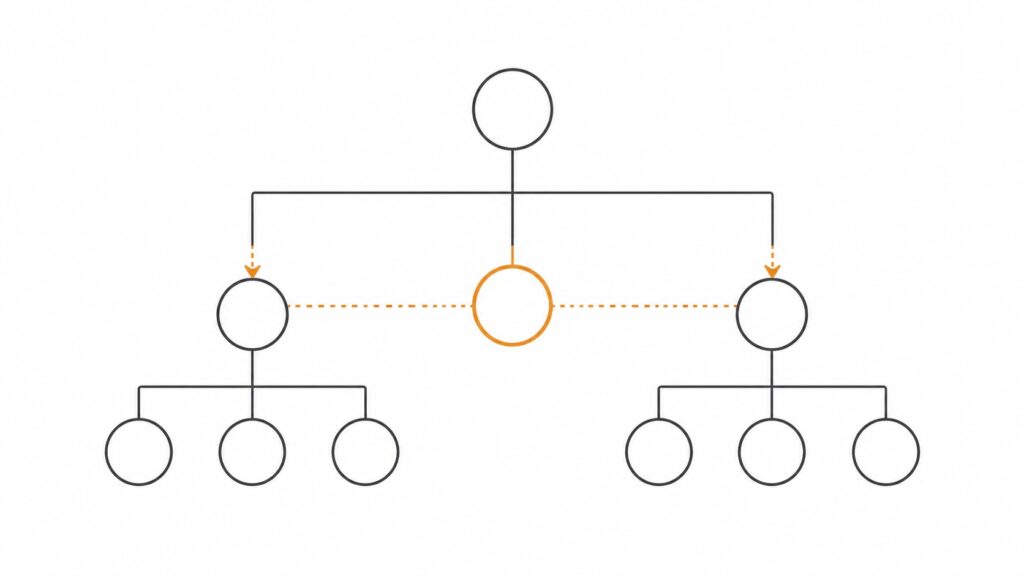
Don’t decide anything yet. Run these four steps in order, over the next 12 weeks.
Step 1 (Weeks 1–2): Verify, Don’t Diagnose From Feeling
Log your week in blocks and tag each one as draining or energizing. Most founders skip this step because they’re sure they already know the answer, and most of them are wrong about where the energy is actually going.
Step 2 (Weeks 3–6): Run the Key Man Risk Audit
List every decision in the business that currently requires you personally. Try to reassign at least half the list.
A Key Man Risk audit that comes back with a long, unmovable list is itself the answer: the business needs delegation work before it needs any decision about your role.
Step 3 (Weeks 3–6): Run the 90-Day Pullback Test
Deliberately reduce your hours, or hand off a defined slice of decisions, for 30 days minimum. Watch the metrics during that window (revenue, ops, team output), not how you feel about it.
If the business holds steady or improves during a genuine 30-day pullback, that’s your strongest evidence this is a seat question, not just a tired month.
Step 4 (Weeks 7–12): Run the Real Numbers
Compare what you cost the business right now against what real operational help would cost. See the comparison below.
Once you’ve run all four steps, assign one person, a board chair, a trusted advisor, or a co-founder, to be the Directly Responsible Individual on this decision, with a hard date 60 to 90 days out. If nobody owns the decision, it doesn’t get made. It gets worse quietly in the background, the way one Seventh Generation co-founder described walking through his own office and realizing he no longer knew what half his team was working on.
Fractional or Full-Time COO: Which Numbers Actually Make Sense?
| Option | Monthly Cost | Annual Cost | Source |
|---|---|---|---|
| Fractional COO (established operator) | $8,000 to $18,000 | $96,000 to $216,000 | Business Operations Consulting, 2026 |
| Full-time COO (~$215K avg. base plus benefits and payroll tax) | ~$23,300 to $25,400 | $280,000 to $305,000+ | Fractionus, 2026 Fractional Executive Rates by Role |
| Cost of not deciding | Compounding, unmeasured | not applicable | CEO Journal Council synthesis |
A fractional COO at $8,000 to $18,000 a month runs roughly 60 to 70% cheaper than a full-time hire’s $280,000 to $305,000-plus true annual cost, but only closes the gap if your Key Man Risk audit shows a fractional-sized problem, not a full-time-sized one.
What breaks this math: if your Key Man Risk audit came back with a long list, a fractional hire alone won’t fix it. You need the delegation work done first, or your new hire just becomes one more person waiting on you.
Common Mistakes (and What They Cost You)
- Waiting for a crisis to force the timing. You lose control of both the narrative and the terms.
- Treating “exhausted this month” and “wrong seat now” as one question. They need different fixes: rest vs. restructure.
- Announcing a change with zero proof it works. This spooks investors and staff far more than the change itself would have. Run the pullback test first.
The “Would I Fire Someone for Doing This?” Checklist
- Making a permanent structural decision off two bad weeks with no data? You’d flag that in an employee. Flag it in yourself.
- Letting a decision this important sit undecided for six-plus months with no owner and no deadline? You wouldn’t tolerate that from a direct report on a call one-tenth this size.
- Hiding the real state of things from your board or co-founder until it becomes a crisis? You’d coach a team member out of it in a heartbeat.
When Should a Founder Step Down? A Sequential Series of Questions and Answers
There’s no single moment that tells you when a founder should step down, but there is a sequence that gets you an answer instead of a guess.
- Next 24 hours: Start the time and energy log. Don’t decide anything yet. Just collect the data.
- Next 7 days: List every decision that currently requires you personally.
- Next 30 days: Pick your DRI and set a decision date 60 to 90 days out.
If you’re already in active crisis rather than at this earlier decision point, our 4-Week Operational Recovery Protocol is the better starting place.
If part of what’s keeping you in the seat is the equity and control math, that’s worth untangling separately in our founder dilution and cap table guide. The ownership question and the operating-role question are two different decisions that often get stuck together.
It’s also worth remembering how far you’ve come from the very first client you landed solo. The fact that this is now a delegation question instead of a survival question is itself a sign of how much the business has outgrown a one-person operation.
Frequently Asked Questions
Is this the same as the burnout recovery article you previously published?
No. That piece is for active recovery from burnout you’re already deep in. This one is for the earlier question of whether the role itself needs to change.
What if I run the tests and realize I don’t want to step down at all?
That’s a valid outcome. These steps replace a gut decision with real data, in either direction.
Do I need a full-time COO, or is fractional enough?
For most $1M to $10M businesses, start fractional ($8,000 to $18,000 a month) and only move to full-time once your Key Man Risk audit shows sustained, high-volume operational need that a part-time person can’t cover.